2018년 11월 19일 월요일

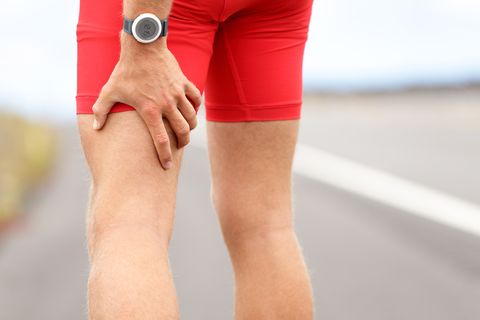
Management of Hamstring injury


Management of Hamstring injury
First 48 hours
RICE(rest, ice, compression, elevation)
Early pain-free muscle contractions
Subsequent
Stretching
l  Hamstring
l  Antagonist muscles
n  Quadriceps
n  Iliopsoas
Neural mobilizing
Soft tissue treatment
l  Hamstrings
l  Gluteal trigger points
Strengthening
l  Hamstrings
1.     Standing single-leg bridge catch
2.     Single-leg ball rollouts
3.     Bridge walkout
4.     Nordics
5.     Single-leg dead lifts with kettle bell
6.     Yo-yo
7.     Askling’s gliding
l  Gluteals and adductor magnus
Neuromuscular control exercises
Spinal mobilization
Cross-Trainig bike
Running program
Sprinting technique drills
Advanced agility drills
Sport-specific training drills

Ref) Clinical sport medicine p.604

2018년 11월 18일 일요일

Patellofemoral pain and patellar tendinopathy

Comparison of the clinical features of patellofemoral pain and patellar tendinopahty
(슬개대퇴증후군과 슬개건병증의 임상적 비교)

Signs
Patellofemoral pain
Patellar tendinopathy
Onset
Running (especially downhill), Steps/stairs, hills Any weight-bearing activities involving knee flexion(e.g. distance running)
Activities involving jumping and/or changing direction(e.g. basketball, volleyball, high jump, netball, bounding, ballet, climbing stairs)
pain
Non-specific or vague May be medial, lateral or infrapatellar, Aggravated by activities that load the Patellofemoral joint
Usually at the inferior pole of patella,
Aggravated by jumping and early-to mid squat
Inspection
Generally normal or VMO wasting
Generalized quadriceps wasting
Tenderness
Usually medial or lateral facets of patella May be tender in infrapatellar region.
May have no pain on palpation due to areas of patella being inaccessible
Commonly inferior pole of patellar tendon attachment.
Occasionally at distal attachment to tibial tuberosity.
Rarely in midtendon
swelling
May have small effusion with either suprapatellar or infrapatellar swelling
Rare
Tendon may be increased in thickness
Clicks/clunks
Occasional
No
Crepitus
Occasionally under patella
No
Giving way
Due to subluxation of (occasionally) quadriceps inhibition
Occasionally due to quadriceps inhibition
Knee range of motion
Usually normal
May be decreased in severe cases
Usually normal
No pain with overpressure
Quadriceps contraction in extension
Note quality of movement
Usually not painful
Some cases are painful
Patellofemoral joint movement
May be restricted in any direction.
Commonly restricted medial glide due to tight lateral structures.
May have normal patellofemoral joint biomechanics, in combined problem will have patellofemoral joint signs
Vastus medialis obliquus
May have obvious wasting, weakness, or more subtle deficits in tone and timing
May have generalized quadriceps weakness
Functional testing
Squats, stairs may aggravate.
Patellofemoral joint taping should decrease pain
Decline squats aggravate pain.
Patellofemoral taping has less effect


Ref) Clinical sport medicine P 682

2018년 11월 17일 토요일

Ilitibial Band Friction Syndrome


Ilitibial Band Friction Syndrome
itb
https://www.painfreephysiotherapy.com/wp-content/uploads/2017/09/itb.jpg

l  Clinical feature
n  Overuse injury presenting as lateral knee pain
n  Result of friction between the ITB and the underlying lateral epicondyle of the femur
n  Commonly seen in runners, cyclists, military recruits, and endurance athletes
l  Treatment
n  Local treatment
u  Ice, electrotherapy
u  NSAIDS may be helpful in the initial stages
u  Corticosteroid injection
n  Soft tissue treatment
u  Dry needling, self massage with a foam roll help to reduce muscle tension and tone in the ITB.
u  Stretching reduce the tension in the tensor fascia lata
u  ITB& Gluteus maximus muscle stretching
u  Strengthning of the hip external rotators and abductors
u  Surgery to release the ITB if conservative management fails.

Ref) Clinical sports Medicine P 720

2018년 11월 16일 금요일

Patella tendinopathy


Patella tendinopathy
patellar tendinopathy
https://www.sportnova.co.uk/wp-content/uploads/2017/01/patella-tendonitis-tendinopat-min.png

l  Clinical feature
n  Pain aggravated by activities
n  Most common site: deep attachment of the tendon to the inferior pole of the patella
n  Reproduce the patient’s pain
l  Ultrasound examination with doppler is more sensitive than MRI
n  Vascurality around the tendon
l  Overview of Management
n  Long recovery period
u  Require more than 3~6 months to recover
n  Relative tendon unloading
n  Progressive strengthening
n  Conservative treatment first
u  Require 6~12 months to return to sports after successful patella tendon surgery
l  Treatment
n  Local reduction
n  Strengthning
n  Soft tissue therapy
n  Cryotherapy
n  Pharmacotherapy
n  Injection theray: corticosteroid, blood injection(autologous blood, platelet-rich plasma)
n  Surgery


Ref) Clinical sports Medicine P 700,702

2018년 11월 15일 목요일

Patellofemoral Pain syndrome

Patellofemoral Pain syndrome
Patellofemoral Pain Syndrome Diagram
https://cdn.shopify.com/s/files/1/0763/4541/files/Featured_Image-min_1_267c0f82-b9ba-4912-8560-9eee7e66730f.jpg?v=1504331569


l  Diagnosis
n  Patellofemoral joint syndrome, anterior knee pain, chondromalacia patellae
n  “Umbrella” term used absence of other pathologies
l  Contributing factor
n  Extrinsic factor
u  Body mass, speed of gait, surfaces, footwear
n  Remote intrinsic factors
u  Increased femoral internal rotation, increased apparent knee valgus, increased tibial rotation, pronated foot type, inadequate flexibility
n  Local intrinsic factor
u  Patella position, soft tissue contriction, neuromuscular control of the vasti

l  Treatment
n  Reduction pain
u  Resting+ Ice, medication, mobilization of patella, taping
n  Addressing extrinsic contributing factor
u  Reduce the load
n  Addressing intrinsic contributing factor
u  Remote factors: hip muscle retraining, improving musculotendinous compliance, foot orthoses.
u  Local factors: patella taping or bracing, improving lateral soft tissue compliance, generalized quadriceps strengthening or vasti retraining

Ref) Clinical Sports Medicine P.686,690,693

2018년 11월 14일 수요일

Pellegrini-Stieda Syndrome

Pellegrini-Stieda Syndrome
Pellegrini Stieda Syndrome Lesion
https://i2.wp.com/boneandspine.com/wp-content/uploads/2015/05/pellegrini-stieda-lesion.jpg?w=330&ssl=1

<Clinical feature>

  • Calcification of MCL femoral origin
  • follow direct trauma
  • Important cause of knee stiffness

<Treatment>

  • Active mobilization
  • Infiltration of a corticosteroid
  • Surgery: presence of significant bone formation & persistent symptoms


ref) Clinical Sports Medicine P.728


2018년 11월 13일 화요일

Pes anserinus tendinopathy

Pes anserinus tendinopathy

pes anserinus bursitis tendinitis
https://physioworks.com.au/injuries-conditions-1/pes-anserinus-bursitis-tendinitis
<Clinical feature>

  • Pes anserinus: Sartorius & gracilis & semitendinosus tendon insertion
  • Overuse syndrome due to knee flexion & resisting valgus strain
  • Swimmers(particularly breaststrokers), cyclists, and runners

<Treatment>

  • General principles of tendinopathy management


ref) Clinical sports medicine P.727


2018년 11월 12일 월요일

Acute addutor strains

급성 내전근 염좌(Acute adductor strains)
Acute adductor strains에 대한 이미지 검색결과
https://chandlerazchiropractor.wordpress.com/2013/03/05/chiropractor-chandler-az-adductor-strain-groin-pull/?postpost=v2

갑자기 방향을 바꾸는 동작
  • 장내전근(Adductor longus)의 손상이 가장 많이 발생함.
  • Physical exam
        -Localized tenderness
        -수동적인 외전시의 통증
        -저항을 준 상태에서의 내전 또는 굴곡/내전시의 통증

  • 점진적인 근력 강화 프로그램


2018년 11월 8일 목요일

Criterion related rehabilitation of Hamstring strain


햄스트링 염좌의 기준 부합 재활

단계
주요기준
1. 달리기 시작과 능동적 재활
(, 아급성/조건부 기간)
·        통증 없는 보행가능
·        저항성 근육 수축에서 적절한 근력
2. 완전한 활동으로의 복귀
(, 기능적 단계의 시작)
·        최대 저항성 근수축에서 모든 증상의 완화
·        촉진 시 불확실한 압통(좌측=우측)
·        관절운동범위/유연성에서 무증상으로 전 범위 도달(좌측=우측)
·        구조화 달리기 프로그램의 성공적인 완료(, 달리기 프로그램 중 중간 20미터 부분의 시간): 부상이 없었을 때의 최대 상태에서의 시간에 도달한 경우
·        적절한 재활 운동의 성공적인 완료
·        조절성 부상 기전에 특화된 기능 수행(운동관련)에 있어서 성공적인 완료
3. 경기 복귀
·        정상 훈련 활동(예를 들어 1주 내내)의 충분한 기간이 부작용이나 기능적 징후, 증상없이 성공적으로 완료
·        추가검사(등속성 근력 검사, AsklingH 검사)


Ref) Clinical sport medicine 4th edition, 스포츠의학 4판 P.604

Hamstring injury's Prognostic factor

햄스트링 손상의 예후인자(Hamstring injury's Prognostic factor)

Hamstring strain
https://www.runnersworld.com/health-injuries/a19575745/hamstring-strains/
다음의 인자들은 스포츠 복귀 시간(time to return to play RTP)을 지연시키는데 관련된 인자들임.
  • 통증 없이 정상 속도의 보행이 가능한 시점(단위: 일) 은 통계적으로 유의하게 RTP time과 관련성이 있음.(통증 없이 정상 보행이 가능한 시점 1일 이상 = RTP time이 3주 이상될 가능성이 4배) 이를 과거 12개월 내의 햄스트링 부상과 조합하면 특급 AFL 미식축구선수에서 복귀 시점이 3주 이상 될 가능성이 93%에 이름.
  • 통증 없이 조깅을 할 수 있는 시점(단위: 일)은 RTP time의 가장 큰 예후인자임.
        - 1~2일 = RTP 가 2주 이내에 가능.
        - 3~5일 = RTP가 통계적으로 유의하게 2주 이상 소요
        - 5일 초과 = RTP가 통계적으로 유의하게 4주 이상 소요
  • MRI상 확인되지 않은 햄스트링 염좌는 상대적으로 빠른 RTP를 보이며 흔함(10~20%).
  • 최대 압통점이 더 근위부일수록(대퇴이두근 손상에서 좌골 골절에 손상이 가까울수록) 부상 전 수준으로의 회복에는 더 많은 시간이 소요됨.
  • 대퇴이두근의 근위 건부분의 손상은 단거리 선수에서 부상 전 수준으로의 회복에 매우 긴 시간을 요함.(근위 건 부분을 포함하지 않는 손상에 비해 2배 이상의 시간이 소요됨)
  • 발차기 또는 저속 신연 기전에 의한 손상은 고속 주행형 손상에 비해서 초기에 증상과 징후가 경미하지만 부상 전 수준으로의 회복에 훨씬 긴 시간을 요함.
  • MRI상 손상이 파열길이(>60mm), 단면적(전체 단면적의 55% 초과)의 소견을 보이는 경우 복귀 시점이 장기화될 수 있음.

Jozy Altidore
https://www.theguardian.com/football/2014/jun/17/jozy-altidore-clint-dempsey-usa-ghana-world-cup
Ref) Clinical sport medicine 4th edition, 스포츠의학 4판 P.602

2018년 5월 13일 일요일

muscle strain


  • 1도 염좌: 약간의 근 섬유들만 손상되고 국소적 통증은 있지만 근력의 손실은 없는 상태.
  • 2도 염좌: 통증과 부종을 동반하여 많은 근섬유가 파열된 상태.                                           통증은 근육이 수축할 때마다 나타난다. 통증에 의해서 근력이 감소되고, 움직임이 제한됨.
  • 3도 염좌: 근육이 완전히 파열되었을 경우. 근육과 건의 접합부에서 가장 흔하게


Ref)스포츠의학 20~21

2018년 1월 29일 월요일

Ottawa Ankle Rules


An ankle x-ray series is only required if there is pain in the malleolar zone AND any of these findings:

  • Bone tenderness at the posterior edge or tip of lateral malleolus, OR

  • Bone tenderness at the posterior edge or top of medial malleolus, OR

  • Inability to bear weight both immediately after injury and at the time of assessment.

2016년 3월 3일 목요일

Gross Motor Function Classification System (GMFCS)


Ref)
1. https://www.youtube.com/watch?v=hVeJiB9sh1M
2. http://calgarycp.org/web/24/bins/content_page.asp?cid=2663-2791